Native Ad Library MCP: Query 635,443 Native Ads From Claude & ChatGPT
Foreplay claimed the ad library MCP for Meta ads. Native networks now have theirs: a hosted MCP server exposing 43 tools over 635,443 Taboola, Outbrain, MGID and Revcontent creatives — here's what agents can do with it and how to set it up.


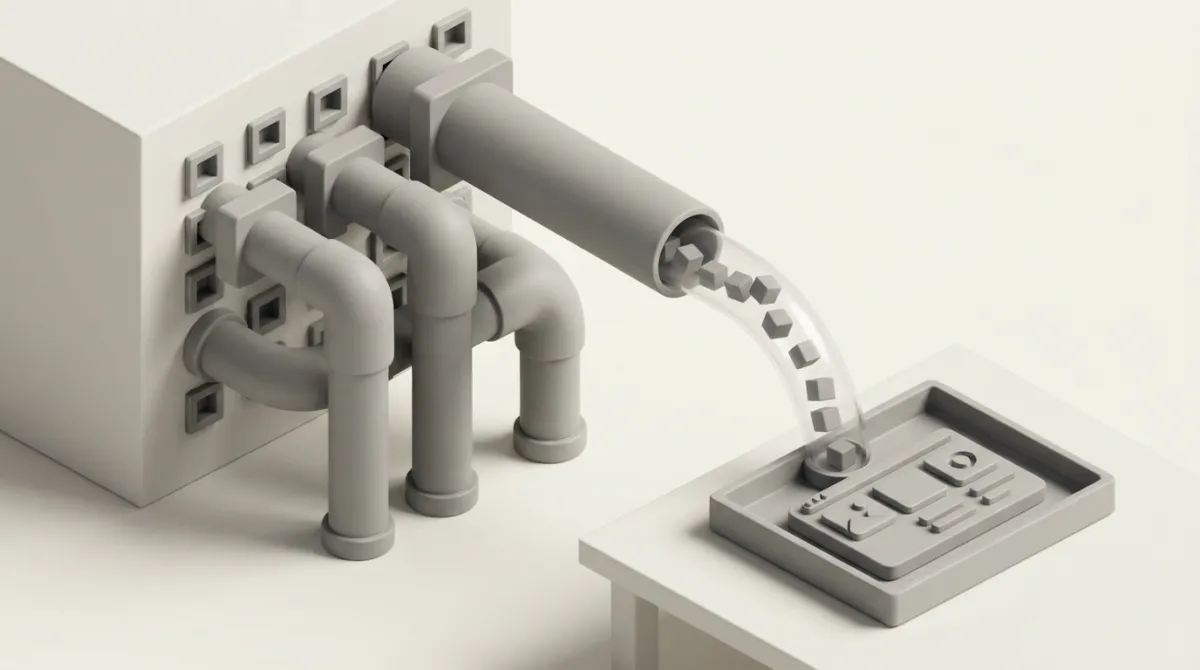
You can now ask Claude or ChatGPT questions like "which advertisers launched new Taboola campaigns in insurance this week, and which of their ads have survived longest?" — and get answers computed from live captured ad data, not the model's training memory. The plumbing that makes this possible is MCP, and as of July 2026 OpenAdLibrary hosts an MCP server at mcp.openadlibrary.com exposing 43 tools over an index of 635,443 native ad creatives from 27,256 advertisers across 46 networks. This guide explains what that means, what the tools do, and how to wire it into your AI assistant in about five minutes.
Meta advertisers already have this pattern: Foreplay shipped an ad library MCP for Meta and TikTok creative research earlier this year. Native discovery networks — Taboola, Outbrain, MGID, Revcontent, the MSN feed — had nothing, which is consistent with the channel's history: there was no public native ad library at all until recently (the backstory is in what is a native ad library). This MCP server is that library, made callable by agents.
What is MCP, in one minute#
MCP (Model Context Protocol) is an open standard, introduced by Anthropic in late 2024 and since adopted across the major AI platforms, that lets AI assistants call external tools. A server publishes a catalog of tools — "search ads", "get brand", "list trending" — each with typed inputs and outputs. The AI client (Claude, ChatGPT, Cursor, VS Code, or your own agent) reads the catalog and decides when to call what. You talk to the assistant in plain English; it handles the API mechanics, pagination, and follow-up calls.
The practical consequence: an ad library stops being a website you browse and becomes a data source your agent can reason over. Instead of twenty minutes of clicking filters, you ask one compound question and the agent chains five tool calls to answer it.
What the OpenAdLibrary MCP exposes#
The hosted server is a thin, authenticated layer over the same public data API described in our native ad data API overview — same index, same quotas, same key. The 43 tools group into six clusters:
| Cluster | Example tools | What agents do with it |
|---|---|---|
| Ad search | search_ads, get_creative, walk_ads_keyset, sync_ads_changes |
Find live ads by network, country, vertical, advertiser or text; sync deltas |
| Brands & advertisers | list_brands, get_brand, search_advertisers, batch_brands, get_brand_hierarchy |
Resolve who is really behind an ad; profile a competitor's whole portfolio |
| Landing pages | list_landing_pages, get_landing_page, get_landing_page_ads |
Pull the traced destination funnel behind a creative |
| Market intel | get_trending, get_share_of_voice, get_keyword_trends, list_new_entrants, get_network_profile |
Spot rising advertisers, measure vertical dominance, compare networks |
| Publishers & supply chain | list_publishers, get_publisher_monetization, get_supply_chain_publisher |
See which sites run which networks and who monetizes where |
| Workflow | watch_advertiser, list_watchlist, save_search, list_boards, list_notifications |
Persist watchlists and searches the agent can check on schedule |
Behind those tools sits the full corpus: 171,050 Taboola creatives, 92,290 from Outbrain, 54,585 from MGID, 12,821 from Revcontent, plus 1,081,997 traced landing pages and 5,874,698 ad observations (July 2026). Every creative carries the real advertiser label, first-seen/last-seen dates, network, geo and language — the raw material for every use case below.
What you can actually do with it#
Competitor research without the tab-farm#
Ask: "Profile competitor-brand.com's native advertising. Which networks are they on, how many live creatives, what angles are they running, and what do their landing pages sell?" The agent chains get_brand → search_ads → get_landing_page_ads and returns a briefing that would take an analyst an afternoon. The manual version of this workflow is documented in how to spy on competitor native ads — the MCP version is the same logic, delegated.
Creative ideation from proven winners#
The most reliable creative brief in native advertising is "what has already survived." Ask: "Find the longest-running health ads on Taboola in the US, cluster their hooks, and draft five new headline angles that use the same psychology without copying." Longevity is the profitability proxy — in our index roughly 89 percent of image creatives disappear within 10 days of first observation, so the survivors are a pre-filtered set of things that work (see ad longevity as a winning signal). An agent with search_ads plus your drafting instructions turns that filter into a creative pipeline, and how to analyze winning native ad creatives supplies the scoring framework worth pasting into your prompt.
Longevity and fatigue checks on demand#
Ask: "Check every ad in my watchlist — which stopped being observed this week, and which crossed 21 days running?" With list_watchlist and sync_ads_changes, this becomes a scheduled agent task rather than a Monday chore. Pair it with how to find winning ads signals and you have an automated market-motion report.
Vertical and network scouting#
Ask: "Compare Taboola vs MGID for the entertainment vertical: creative volume, top advertisers, and new entrants in the last 30 days." Tools like get_network_profile, get_share_of_voice and list_new_entrants were built for exactly this aggregation. For background on how the networks differ, MGID vs Taboola is the human-written version.
Setup walkthrough#
The server speaks Streamable HTTP — the current MCP transport standard — at https://mcp.openadlibrary.com/mcp, and authenticates with your personal API key sent as a Bearer token. Every major client follows the same pattern.
Step 1 — get a key. Create a free account, then mint an API key in Settings. Keys look like oal_... and are shown once. The free tier is genuinely limited: 2 requests/day, enough to verify the connection and run a couple of tool calls. A paid plan ($29.99/month) unlocks the standard quota of 5,000 requests/day.
Step 2 — add the connector. In Claude, add a custom connector pointing at https://mcp.openadlibrary.com/mcp with your key as the Authorization header. In Claude Code it is one command:
claude mcp add --transport http openadlibrary \
  https://mcp.openadlibrary.com/mcp \
  --header "Authorization: Bearer oal_YOUR_KEY"
Cursor, VS Code and most other clients accept the equivalent JSON config:
{
  "mcpServers": {
    "openadlibrary": {
      "url": "https://mcp.openadlibrary.com/mcp",
      "headers": { "Authorization": "Bearer oal_YOUR_KEY" }
    }
  }
}
Step 3 — smoke test. Ask your assistant: "Using the openadlibrary tools, how many live Taboola ads mention hearing aids, and who runs the most?" If you get numbers back with advertiser names, you are wired up. If you get an authentication error instead, the usual culprit is a missing Bearer prefix on the key.
A few operational notes worth knowing. The server is stateless and multi-tenant — your key is your identity, and quotas and rate limits (120 requests/minute burst) are enforced per key, exactly as on the raw REST API. There is no separate MCP pricing; it is the same plan and the same quota pool as the public API. And because the server is a pass-through over /api/v1, anything you can do in the MCP you can also script directly — the ad spy tools with an API comparison covers when REST beats MCP and vice versa.
A worked example: competitor teardown in one session#
To make this concrete, here is a real session pattern — the kind of compound task that justifies the setup. Suppose you sell hearing aids and want to understand the native landscape before committing budget.
Turn 1: "Search the native ad index for hearing aid ads across Taboola and Outbrain in the US. How many live creatives, and who are the top five advertisers by creative count?" The agent calls search_ads with network and text filters, aggregates, and names names — including the shell brands you have never heard of that turn out to run hundreds of creatives.
Turn 2: "For the top advertiser, pull their longest-observed creatives and the landing pages behind them. What is the funnel structure?" The agent chains get_brand, search_ads sorted by observed lifetime, and get_landing_page_ads. You learn whether the winners run quiz funnels, advertorials or straight product pages — the difference between copying a headline and understanding a strategy.
Turn 3: "Add the top three advertisers to my watchlist and save this search." The agent calls watch_advertiser and save_search, so next week's session starts with "what changed in my watchlist?" instead of starting over.
Twenty minutes, no tabs, and the output is a written brief you can paste into a campaign doc. The equivalent manual workflow is real — we documented it in how to do competitor ad analysis — but it is an afternoon, not twenty minutes.
Prompting patterns that get good answers#
Ad-data agents fail in predictable ways, and three habits prevent most failures.
Scope before you sweep. "Show me winning ads" forces the agent to guess at network, geo and vertical, burning quota on broad calls. "US Taboola ads in insurance observed 14+ days" gets a precise tool call on the first try — which matters on a metered key.
Ask for the evidence, not just the conclusion. Have the agent return creative IDs, first-seen dates and advertiser labels alongside its summary. Agents summarize confidently; the discipline of citing rows keeps them honest and makes the output verifiable in the dashboard.
Teach the longevity caveat once. Add to your project instructions: "days running means observed days within a rolling ~31-day window; treat it as a floor." Every longevity conclusion the agent draws downstream inherits that correction — that piece of domain knowledge is what turns raw tool access into competent analysis.
For AI builders: beyond the chat clients#
Nothing about the server assumes a chat UI. Because it speaks standard Streamable HTTP MCP, it plugs into agent frameworks — the Claude Agent SDK, OpenAI's Agents SDK, LangChain's MCP adapters — as a tool source for fully autonomous pipelines. The patterns we see working: a weekly cron agent that walks a watchlist and emails a competitor digest; a creative-generation pipeline that retrieves the ten longest-surviving ads in a vertical as few-shot context before drafting; and internal Slack bots that answer "who is advertising X?" for the whole team without seat licenses.
Quota design deliberately supports this: keys are per-user, quotas are enforced server-side (5,000 requests/day standard, 120/minute burst), and the MCP layer is stateless, so horizontal agent concurrency does not need session affinity. If you would rather skip MCP overhead in a pure-code pipeline, the same operations exist as plain REST at /api/v1 with identical semantics.
Where the data comes from (and why agents can trust it)#
An agent's conclusions are only as good as the corpus underneath, so it is worth knowing what the tools are actually querying. The index is built by continuously capturing live native ad placements from public publisher pages — the sponsored recommendation units everyone sees under articles — via the networks' own delivery APIs, never by clicking live ads (clicking would charge advertisers real money and pollute their analytics; capture and click-tracing are separated by design). Each captured creative is stored at full quality, classified by vertical and language, resolved through its tracker redirect chain to a real advertiser label, and — for a growing share — linked to a traced landing page. That resolution step matters more for agents than for humans: when Claude reports that a vague "sponsored" brand is actually a specific insurance lead-gen operator, it is reading the brandLabel field, not guessing.
Scale and freshness are measurable rather than asserted: 5,874,698 ad observations to date, with the Taboola slice alone showing 167,524 creatives first observed inside the last 30 days (July 2026). For agents, that freshness is the difference between "here is what worked in native advertising once" and "here is what is running right now" — and it is why longevity checks, new-entrant scans and trend questions return answers that change week to week, the way a live market actually behaves.
MCP vs the dashboard: when to use which#
The dashboard remains better for visual browsing — scanning creative grids, eyeballing image styles, the serendipity work described in how to find winning native ad angles. The MCP wins whenever the question is compound ("find X, then for each, check Y"), scheduled (weekly digests), or feeds another system (a brief, a report, a model). Most practitioners will end up using both: browse to build intuition, delegate to agents for repetition.
One caution for the AI-builder audience: agents amplify data quality issues. Our index observes ads in a rolling window (currently up to about 31 days of continuous observation per creative), so "days running" means observed days, not lifetime — instruct your agent accordingly, or its longevity conclusions will be systematically conservative. The same caveat applies to every ad library, including Meta's; the difference is whether the vendor tells you.
The bottom line#
"Ad library MCP" barely existed as a phrase before 2026 — Foreplay claimed it for Meta ads, and native networks now have their own at mcp.openadlibrary.com: 43 tools over 635,443 native creatives, 1,081,997 landing pages, and a workflow layer for watchlists and saved searches, on the same key and quota as the public API from $29.99/month with a free test tier. If you are a technical marketer or an AI builder, the pitch is simple: competitor ad research is becoming an agent task, and agents need a data source that speaks their protocol. For native advertising, this is it.